For the bigger picture and full context, make sure you read our main guide on Dream Journal Format: How to Best Record Your Dreams.
Ever wake up with the lingering feeling of a powerful dream, only to have it fade away like morning mist? A well-structured dream journal is your tool to capture those fleeting glimpses into your subconscious. Let's explore how using a sample dream journal can unlock a deeper understanding of yourself.
At a glance:
- Discover a basic template to consistently record your dreams.
- Learn how to track recurring patterns and themes.
- Get inspired by dream journal prompts to unlock hidden meanings.
- See how digital tools can enhance your dream journaling experience.
- Decide if a template or a freeform journal works best for you.
Why Use a Sample Dream Journal?
A blank page can be intimidating. A sample dream journal, or even a pre-designed template, gives you a starting point. It provides structure, prompting you to record key details you might otherwise forget. Think of it as training wheels for your dream exploration. You can always customize the template later to fit your unique needs. Record your dreams effectively. This is a crucial step towards self-discovery.
Building Your Dream Journal Template: Essential Components
Forget aimless scribbling. A good dream journal template includes specific sections to guide your recall and analysis. Here's a breakdown of the essential components:
- Date and Time: Always record the date and time of the dream. This helps to correlate dream content with events in your waking life.
- Sleep Quality: Note how well you slept. Were you restless? Did you wake up frequently? Sleep quality can significantly impact dream recall and content.
- Keywords/Tags: Jot down a few keywords that capture the dream's essence. This will be invaluable when you're searching for patterns later on. (e.g., "flying," "teeth falling out," "being chased").
- Dream Narrative: Write down the dream as vividly and accurately as possible. Use present tense to immerse yourself in the experience. Include sensory details: sights, sounds, smells, tastes, and textures.
- Emotions: What emotions did you feel during the dream? Fear, joy, confusion, sadness? Emotions are powerful clues to the dream's underlying meaning.
- Symbols: Identify any prominent symbols or metaphors. What do they represent to you? Don't rely solely on generic dream dictionaries; trust your intuition.
- Potential Meanings/Reflections: This is where you begin to analyze the dream. How does it relate to your current life situation? What unresolved issues might it be highlighting?
- Waking Life Connections: Explore connections between your dream and recent events, thoughts, or feelings in your waking life. This can provide valuable insights into what your subconscious is processing.
Example: - Date/Time: October 26, 2023 / 6:30 AM
- Sleep Quality: Restless, woke up twice.
- Keywords/Tags: Exam, unprepared, school hallway
- Dream Narrative: I was in my old high school, wandering the hallways. I realized I had a huge exam I hadn't studied for. I felt panicky and couldn't find the right classroom. Everyone else seemed to know what they were doing. The bell rang, and I was still lost.
- Emotions: Anxiety, panic, fear, embarrassment.
- Symbols: High school (stress, past challenges), exam (test, evaluation).
- Potential Meanings/Reflections: Feeling unprepared for something in my current life? Relates to work project deadline?
- Waking Life Connections: Big presentation at work next week. Feeling underprepared.
Yearly Pattern Theme Tracker
A critical, often overlooked, section. This is where you log recurring themes, symbols, and emotions across all your dreams. After a month or two of consistently journaling, you can begin to identify patterns.
- Themes: List recurring themes like "flying," "falling," "being chased," "loss of teeth," "returning to school."
- Symbols: Note repeating symbols like specific animals, places, or objects.
- Emotions: Track dominant emotions such as anxiety, joy, fear, sadness, anger.
This yearly snapshot allows you to see the bigger picture and understand the overarching narratives that are playing out in your subconscious.
Sleep Tracker
The simplest element, but often the most telling. A sleep tracker helps you correlate sleep quality with dream content and recall.
- Hours of Sleep: Record the approximate number of hours you slept.
- Sleep Quality (Scale of 1-5): Rate your sleep quality from 1 (very poor) to 5 (excellent).
- Factors Affecting Sleep: Note anything that might have affected your sleep, such as stress, caffeine, alcohol, or a late-night meal.
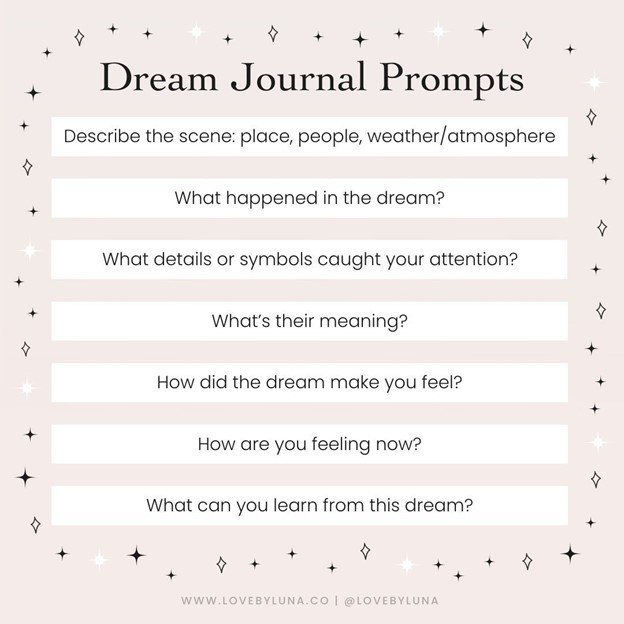
Refine Your Dream Journaling with Targeted Prompts
A sample dream journal provides structure, but prompts add depth and encourage exploration. Here are some prompts to consider:
- If this dream were a movie, what genre would it be? (Comedy, thriller, drama, etc.)
- What was the most absurd or illogical element of the dream?
- If you could change one thing about the dream, what would it be?
- What does this dream tell me about my fears?
- What are the positive aspects of the dream, if any?
- If I could ask one character in the dream a question, what would it be?
- What past experiences does this dream remind me of?
- What needs or desires might this dream be expressing?
- How can I apply the insights from this dream to my waking life?
Paper vs. Digital Dream Journals: Which is Right for You?
The best dream journal is the one you'll actually use. Consider the pros and cons of paper versus digital:
Paper Dream Journal:
- Pros: Tactile experience, no distractions, can be personalized with drawings and embellishments.
- Cons: Can be bulky, harder to search and analyze, may not be accessible when traveling.
Digital Dream Journal (App or Document): - Pros: Easily searchable, can be password-protected, accessible on multiple devices, often includes features like tagging and audio recording.
- Cons: Can be distracting, requires a device, potential for technical issues.
Decision: - Choose paper if you prefer a more traditional, hands-on approach and don't mind the limitations.
- Choose digital if you want the convenience of searchability, accessibility, and additional features.
Dream Journal Apps: A Deeper Dive
Several apps are specifically designed for dream journaling, offering features beyond simple text entry:
- Dream Journal Ultimate: Offers advanced tagging, mood tracking, and dream interpretation tools.
- Lucidly: Focuses on lucid dream induction and offers features like reality check reminders.
- Dream Catcher: Allows for audio recording and includes a community forum for sharing dreams.
Key App Features to Look For: - Tagging: The ability to tag dreams with keywords for easy searching.
- Mood Tracking: Tracking your emotions before and after dreaming to identify correlations.
- Audio Recording: Recording your dream narrative verbally for faster capture.
- Cloud Sync: Backing up your dream journal data to the cloud for safekeeping.
- Search Functionality: Quickly searching for specific keywords or themes within your dreams.
- Calendar View: Visualizing dream frequency over time to identify patterns.
Dream Journaling "Rules": Best Practices for Success
While a sample dream journal gives you a framework, these best practices solidify your efforts:
- Consistency is Key: Aim to record your dreams every day, even if you only remember fragments.
- Record Immediately: Write down your dream as soon as you wake up, before the details fade.
- Don't Censor Yourself: Write down everything you remember, even if it seems irrelevant or embarrassing.
- Be Specific: Use vivid language and sensory details to bring your dreams to life.
- Trust Your Intuition: Don't be afraid to interpret your dreams based on your own feelings and associations.
- Review Regularly: Review your dream journal entries regularly to identify recurring patterns and themes.
- Be Patient: Dream interpretation is a process. Don't expect to understand everything immediately.
Common Questions About Dream Journaling
Q: What if I don't remember my dreams?
A: Dream recall can be improved with practice. Keep a dream journal by your bed, set the intention to remember your dreams before you go to sleep, and avoid hitting the snooze button, as this can disrupt dream recall.
Q: Do I need to interpret every dream?
A: No. Some dreams are simply random neural firings. Focus on the dreams that feel significant or emotionally charged.
Q: Are online dream dictionaries helpful?
A: They can be a starting point, but don't rely on them exclusively. Dream symbols are highly personal. Your own associations are more important than generic interpretations.
Q: What if my dreams are disturbing?
A: Disturbing dreams can be a sign of unresolved issues or suppressed emotions. Journaling about them can help you process these feelings and gain insight into their root causes. If disturbing dreams are frequent or overwhelming, consider seeking professional help.
Q: How long should I keep a dream journal?
A: There's no set time limit. Many people find dream journaling to be a lifelong practice that enhances self-awareness and personal growth.
Your Dream Journey Starts Now
Using a sample dream journal is more than just recording your dreams; it's a pathway to understanding your inner world. Start with a template, personalize it, and commit to consistent journaling. You might be surprised at what you discover. So, grab a notebook or download an app, and begin your journey into the fascinating realm of your dreams.